To Become a Champion, You Must Be Born by Champions: The Story of Angelina Topić
 A few days ago, Angelina Topić did not win a medal at the European Championships in Birmingham. For many, this immediately became a “surprise”, a “failure”, a “disappointment”. That is often how sport works in the eyes of the public: while an athlete is flying, everyone admires them; but the moment they fail to clear a bar that we had already cleared for them in their biography, we suddenly start looking for explanations.
Angelina came to Birmingham as one of the favourites. She had a season in which she showed that she belongs at heights of two metres, and then, in the final, she stopped at a height she would usually clear almost routinely. Regional media reported her words that she “froze”, that she could not feel her legs, that she was shaking and lost coordination. More importantly, she did not look for an excuse. She said that the conditions were the same for everyone and that she accepted responsibility herself.
That is why the story of Angelina Topić perhaps makes even more sense now than it would have if she had brought gold home from Birmingham.
There is one sentence by Professor Vasilis Klissouras that I have never forgotten: “To become a champion, you must be born by champions.”
At first glance, it sounds unfair. As if it tells us that everything is written in our genes in advance. But when we look at the story of Angelina Topić, that sentence takes on a different meaning. It does not speak only about genetics. It speaks about a home where everyone knows what training means; about parents who know what sacrifice for success means; about medals on the walls, but also about all the other things that sport carries with it.
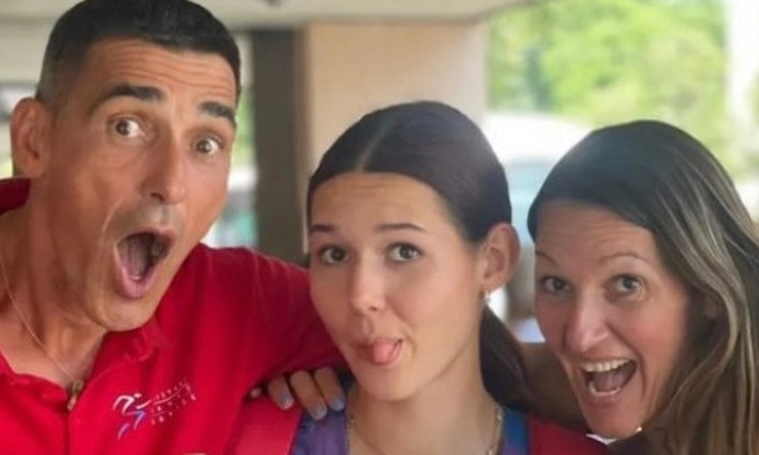
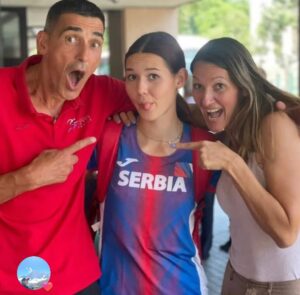
Angelina Topić is today one of the greatest young stars of world athletics and the best Serbian high jumper. She was born on 26 July 2005 in Belgrade. Her father, Dragutin Topić, was a European champion and record-holder in the high jump. Her mother, Biljana Topić, was one of the best triple jumpers in the world and a Serbian record-holder. So Angelina grew up with athletics. But that is where the most important part of the story begins: heritage can help, but results come from hard work.
Angelina showed very early that she was not only “the daughter of Dragutin and Biljana Topić”. As a teenager, she won a medal at the European Championships in Munich in 2022 and became one of the youngest medal winners in the history of European championships. That same year, she received the prestigious Piotr Nurowski Prize for the best young female athlete in Europe. Her official biography and results show a steady rise in the high jump, including national records and top-level performances on the European and world stage.
In sport, people often say that talent is everything. In reality, talent is only necessary for a good result. It is equally important when you come from a family in which both father and mother have already lived through what others only dream about. In such an environment, there is not much room for excuses. Everyone knows when training takes place, what recovery means, why sleep matters, what should be eaten, how the body is protected, and how one small technical mistake can change an entire jump.
That is why the story of Angelina is not only a story about genes and the interaction between the individual and the environment. Science today clearly shows that traits important for sport — strength, speed, height, muscle fibre composition, the ability to adapt to training — arise from a complex interaction between genes and environment. But science also warns us that there is no single “champion gene”. Even ACTN3, a gene often mentioned in sports requiring speed and explosive power, explains only one small part of a much larger puzzle. In Angelina’s case, perhaps the other part of the puzzle is even more important: not only biological potential, or genotype, but also the sporting environment, or phenotype.
And that is a huge advantage. When a child trains alongside parents who were elite athletes, she does not receive only advice. She receives a system. She receives people who recognise details. She receives people who understand everything. She receives someone who knows that defeat is not the end, that injury is not a disgrace, that success is not accidental, and that a medal is never just a medal.
Dragutin Topić is much more than a father in this story. He is a coach who knows the high jump down to the last millimetre. He knows the run-up, the take-off, body position, rhythm, fear, and the moment when an athlete begins to doubt. But that is exactly where the most difficult relationship possible begins: how can one be both father and coach at the same time? As the powerful Top perhaps once said rather bluntly in an interview: “A coach has to be a bastard and say what a father could never say.”
A coach must demand more. A father wants to protect. A coach sees the mistake. A father sees the child. A coach must tell the truth even when it hurts. A father would, most of all, want to embrace her. In that tension between love and demand, great athletes are often born. Not because it is easy, but because it is difficult.
Biljana Topić, on the other hand, brought a different kind of strength. The strength of a mother who knows what the big stage means. She knows what pressure means. She knows what it means when the body can do it, but the mind does not believe. She knows what it means when a medal slips away, when injustice hurts, when a career does not always go the way you deserved. That is precisely why her presence matters. In the end, someone had to give birth to a champion, which Biljana jokingly commented on by saying: “I gave birth to an alien — what’s your superpower?”
All of this reminds me of the story of Icarus from Greek mythology, when Daedalus made wings for his son Icarus and taught him how to fly. He warned him not to fly too low, because the sea would weigh down his wings, nor too high, because the sun would melt them. The story ended tragically, because Icarus did not understand measure. Fortunately, in our story it is different, because sport wrote a different version of the same myth. In the Topić family, the father also gave wings, but he did not give only wings. He gave technique, measure, discipline and warning. The mother gave balance, understanding and calm. And Angelina had to do what no parent can do instead of a child — to fly over the bar herself.
And she flew over it.
And then Paris came.
The 2024 Olympic Games were supposed to be a great moment. Angelina was in form, ready, young enough to be a miracle and good enough no longer to be a surprise. And then, during warm-up, came the ankle injury. A moment when a dream turns into pain. The Associated Press reported at the time that Angelina suffered a fracture of her right ankle during the qualifications and would not be able to compete in the final, although she had qualified for it. That may be the hardest moment in sport: when you have not lost because you were weaker, but because your body said “no” at the very moment when your heart was saying “yes”.
And it is exactly there that Angelina becomes more than a result. Because she did not only clear a height. She cleared pain, fear and the injustice of the moment. She reached the final and then had to withdraw. For a nineteen-year-old athlete, that is not only a sporting defeat. It is a collision with the fact that elite sport offers no guarantees, not even to the most talented.
But what happened after Paris shows why Angelina is special.
Less than a month later, at the World U20 Championships in Lima in 2024, she won gold in the high jump. Official World Athletics results record her victory at the U20 Championships in Lima. It was not just a medal. It was an answer. Not to the crowd, not to rivals, not to journalists — but to herself. Proof that the injury had not managed to take away the most important thing: her belief that she belongs at the very top. And as a doctor, I can tell you that this was medically impossible — but it happened. A true miracle.
That is why the story of Angelina Topić is so important for all young athletes, but also for their parents. It shows that a champion is not made only of talent. A champion is made of relationships. Of family. Of work. Of trust. Of pain that is survived. Of the moment when a child guided by her parents begins to build her own greatness. And perhaps the most beautiful part of this story is precisely that Angelina today is no longer merely a continuation of a family tradition. She has already become its new chapter.
Dragutin and Biljana had great careers. They had records, medals, history, injustices, pride and wounds that only athletes can understand. For Biljana, the world medal from Berlin in 2009 was for a long time a symbol of injustice, because due to a doping case involving a rival she was left without the place that rightfully belonged to her in sporting terms. Dragutin was for decades a synonym for Serbian high jumping. But now Angelina has done what great children of great parents sometimes manage only if they are truly special: she did not remain in their shadow.
She continued them.
And surpassed them.
The full repayment came in Tokyo, where Angelina won a historic senior bronze medal. Dragutin then said through tears: “This bronze is something that was missing in the Topić family — for both me and Biljana. She surpassed us a long time ago.”
That is why Professor Klissouras’ opening sentence can remain, but we must understand it more broadly. To become a champion, perhaps it really does help to be born by champions. But it is even more important that someone teaches you what a champion does when no one is watching. How they behave when they win. How they behave when they lose. How they rise after an injury. How they remain silent when it hurts. How they return when everyone thinks it is over.
And that is why her story is so beautiful.
♥
Da biste postali šampion, moraju da vas rode šampioni: priča o Angelini Topić
Pre nekoliko dana Angelina Topić nije osvojila medalju na Evropskom prvenstvu u Birmingemu. Za mnoge je to odmah postalo “iznenađenje”, “podbačaj”, “razočaranje”. Tako sport često funkcioniše u očima javnosti: dok sportista leti, svi mu se dive; kada jednom ne preskoči letvicu koju smo mi unapred preskočili u njegovoj biografiji, odjednom tražimo objašnjenje.
Angelina je u Birmingem došla kao jedna od favoritkinja. Imala je sezonu u kojoj je pokazala da pripada visinama od dva metra, a onda je u finalu stala na visini koju inače preskače gotovo rutinski. Regionalni mediji preneli su njene reči da se “zaledila”, da nije osećala noge, da se tresla i izgubila koordinaciju. Još važnije, nije tražila izgovor. Rekla je da su uslovi bili isti za sve i da odgovornost prihvata sama.
Zato priča o Angelini Topić sada možda ima još više smisla nego da je iz Birmingema donela zlato.
Postoji jedna rečenica profesora Vasilisa Klisaurasa koju nikada nisam zaboravio: “Da biste postali šampion, moraju da vas rode šampioni.”
Na prvi pogled, zvuči nepravedno. Kao da nam poručuje da je sve unapred zapisano u genima. Ali kada pogledamo priču Angeline Topić, ta rečenica dobija drugačije značenje. Ne govori ona samo o genetici, govori o kući u kojoj se zna šta znači trening, o roditeljima koji znaju šta znači odricanje radi postizanju uspeha, o medaljama na zidovima, ali svim ostalim stvarima koje sport nosi.
Angelina Topić je danas jedna od najvećih mladih zvezda svetske atletike i najbolja srpska skakačica uvis. Rođena je 26. jula 2005. godine u Beogradu. Njen otac Dragutin Topić bio je evropski šampion i rekorder u skoku uvis. Njena majka Biljana Topić bila je jedna od najboljih troskokašica sveta i rekorderka Srbije. Dakle, Angelina je odrasla uz atletiku. Ali tu počinje najvažniji deo priče, nasleđe može da pomogne, ali rezultat donosi težak rad.
Angelina je vrlo rano pokazala da nije samo “ćerka Dragutina i Biljane Topić”. Već kao tinejdžerka osvojila je medalju na Evropskom prvenstvu u Minhenu 2022. godine i postala jedna od najmlađih osvajačica medalje u istoriji evropskih prvenstava. Iste godine dobila je i prestižnu nagradu “Pjotr Nurovski” za najbolju mladu sportistkinju Evrope. Njena zvanična biografija i rezultati pokazuju stalni uspon u skoku uvis, uključujući nacionalne rekorde i vrhunske plasmane na evropskoj i svetskoj sceni.
U sportu se često kaže da je talenat sve, a u stvari je samo neophodan za dobar rezultat. Podjednako je važno kada dolazite iz porodice u kojoj su otac i majka već prošli ono o čemu drugi samo sanjaju. U takvom ambijnetu nema mnogo mesta za izgovore. Zna se kada je trening, zna se šta je oporavak, zna se zašto se spava, šta se jede, kako se čuva telo i koliko jedna mala tehnička greška može da promeni ceo skok.
Zato priča o Angelini nije samo priča o genima i interakciji osobe sa okolinom. Nauka danas jasno pokazuje da osobine važne za sport — snaga, brzina, visina, sastav mišićnih vlakana, sposobnost adaptacije na trening — nastaju iz složene interakcije gena i sredine. Ali nauka isto tako upozorava da ne postoji jedan “gen za šampiona”. Čak i ACTN3, gen koji se često pominje u sportovima brzine i eksplozivne snage, objašnjava samo jedan mali deo velike slagalice. Kod Angeline je možda važnije taj drugi deo slagalice, ne samo biološki potencijal ili genotip, nego i sportsko okruženje ili fenotip.
A to je ogromna prednost. Kada dete trenira uz roditelje koji su bili vrhunski sportisti, ono ne dobija samo savete. Dobija sistem. Dobija ljude koji prepoznaju detalje. Dobija ljude koji razumeju sve. Dobija nekoga ko zna da poraz nije kraj, da povreda nije sramota, da uspeh nije slučajnost i da medalja nikada nije samo medalja.
Dragutin Topić je u toj priči mnogo više od oca. On je trener koji zna skok uvis do poslednjeg milimetra. Zna zalet, odraz, položaj tela, ritam, strah, trenutak kada sportista počne da sumnja. Ali upravo tu nastaje najteži mogući odnos: kako biti otac i trener u isto vreme? Kako je možda moćni Top u jednom intervju možda grubo rekao: “Trener mora da bude džukela i da kaže ono što otac nikada ne bi rekao”.
Trener mora da traži više. Otac želi da zaštiti. Trener vidi grešku. Otac vidi dete. Trener mora da kaže istinu i kada boli. Otac bi, najradije, zagrlio. U toj napetosti između ljubavi i zahteva često se rađaju veliki sportisti. Ne zato što je lako, nego zato što je teško.
Biljana Topić, sa druge strane, je donela drugu vrstu snage. Snagu majke koja zna šta znači velika scena. Zna šta znači pritisak. Zna šta znači kada telo može, ali glava ne veruje. Zna šta znači kada medalja izmakne, kada nepravda zaboli, kada karijera ne ide uvek onako kako ste zaslužili. Upravo zato je njeno prisustvo važno. Na kraju neko je morao da rodi šampiona što je Biljana šaljivo prokomentarisala: “Ja sam rodila vanzemaljca, a koja je tvoja supermoć?”
Sve ovo me podesća na priču o Ikaru iz grčke mitologije kada je Dedal svom sinu Ikaru napravio krila i naučio ga kako da leti. Upozorio ga je da ne ide ni prenisko, jer će mu more otežati krila, ni previsoko, jer će ih sunce istopiti. Priča se završila tragično, jer Ikar nije razumeo meru. Srećom u našoj priči je drugačije, jer je sport napisao drugačiju verziju istog mita. U porodici Topić otac je takođe dao krila, ali nije dao samo krila. Dao je tehniku, meru, disciplinu i opomenu. Majka je dala ravnotežu, razumevanje i mir. A Angelina je morala da uradi ono što nijedan roditelj ne može umesto deteta — da sama poleti preko letvice. I preletela je.
A onda je došao Pariz.
Olimpijske igre 2024. godine trebalo je da budu veliki trenutak. Angelina je bila u formi, spremna, dovoljno mlada da bude čudo i dovoljno dobra da više ne bude iznenađenje. I onda, tokom zagrevanja, povreda skočnog zgloba. U trenutku kada se san pretvara u bol. Associated Press je tada objavio da je Angelina tokom kvalifikacija doživela frakturu desnog skočnog zgloba i da neće moći da nastupi u finalu, iako se prethodno kvalifikovala. To je možda najteži trenutak u sportu: kada niste izgubili zato što ste bili slabiji, nego zato što vam je telo reklo “ne” u trenutku kada je srce govorilo “da”.
I baš tu Angelina postaje više od rezultata. Jer ona nije samo preskočila visinu. Ona je preskočila bol, strah i nepravdu trenutka. Ušla je u finale, a zatim morala da odustane. Za devetnaestogodišnju sportistkinju to nije samo sportski poraz. To je sudar sa činjenicom da vrhunski sport ne daje garancije ni najtalentovanijima.
Ali ono što se desilo posle Pariza pokazuje zašto je Angelina posebna.
Manje od mesec dana kasnije, na Svetskom prvenstvu za juniore u Limi 2024. godine, osvojila je zlato u skoku uvis. Zvanični rezultati World Athletics beleže njenu pobedu na U20 prvenstvu u Limi. To nije bila samo medalja. To je bio odgovor. Ne publici, ne rivalima, ne novinarima — nego sebi. Dokaz da povreda nije uspela da joj uzme ono najvažnije: veru da pripada samom vrhu. I za to vam mogu reći da je medicinski nemoguće, ali se dogodilo. Pravo čudo.
Zato je priča o Angelini Topić toliko važna za sve mlade sportiste, ali i za njihove roditelje. Ona pokazuje da šampion ne nastaje samo iz talenta. Šampion nastaje iz odnosa. Iz porodice. Iz rada. Iz poverenja. Iz bola koji se preživi. Iz trenutka kada dete koje su vodili roditelji počne da gradi sopstvenu veličinu. I možda je najlepši deo te priče upravo to što Angelina danas više nije samo nastavak porodične tradicije. Ona je već postala njeno novo poglavlje.
Dragutin i Biljana su imali velike karijere. Imali su rekorde, medalje, istoriju, nepravde, ponos i rane koje samo sportisti razumeju. Biljani je svetska medalja iz Berlina 2009. godine dugo bila simbol nepravde, jer je zbog doping slučaja rivalke ostala bez mesta koje joj je sportski pripadalo. Dragutin je decenijama bio sinonim za srpski skok uvis. Ali sada je Angelina uradila ono što velika deca velikih roditelja ponekad uspeju samo ako su zaista posebna: nije ostala u njihovoj senci.
Ona ih je nastavila. I prevazišla. A potpuna naplata je došla u Tokiju, gde je Angelina osvojila istorijsku seniorsku bronzanu medalju. Dragutin je tada, kroz suze, izjavio: “Ova bronza je nešto što je falilo porodici Topić – i meni i Biljani. Ona nas je odavno prevazišla”.
Zato naslovna rečenica profesora Klisaurasa može da ostane, ali je moramo razumeti šire. Da biste postali šampion, možda zaista pomaže da vas rode šampioni. Ali još je važnije da vas neko nauči šta šampion radi kada ga niko ne gleda. Kako se ponaša kada pobedi. Kako se ponaša kada izgubi. Kako ustaje kada se povredi. Kako ćuti kada boli. Kako se vraća kada svi misle da je gotovo. I zato je njena priča toliko lepa.