Constantino „Tino“ Balestra (1964 – ) The Professor I Am Still Learning From / Profesor od koga još uvek učim
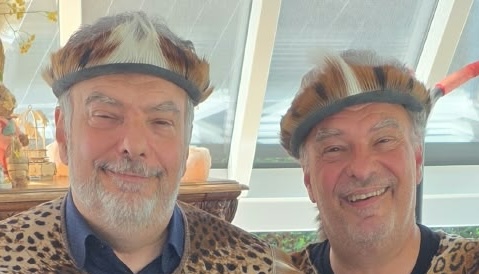
 We have many professors in our lives.Some we forget as soon as we pass the exam. We remember others because of a single sentence. And then there are those from whom we continue to learn long after we are no longer students.For me, one of those professors is Constantino Balestra. Tino, as he is known to those who know him well.
When you look at his professional biography, it is easy to understand why he is so well known in the world of diving physiology and medicine. He is Professor of Physiology and Director of the Integrative Physiology Laboratory at the Haute École Bruxelles-Brabant in Brussels, and Vice President of Research and Education at DAN Europe.
But to me, he is first and foremost – a professor. And he has been one for a very long time.
I first met him in Belgrade, when he was one of the international professors who came to lecture to the first generation of physicians undertaking subspecialty training in hyperbaric medicine. I remember those lectures, but even more than that, I remember the feeling that we were listening to someone who was not simply passing on what he had read, but speaking about something he genuinely researched, understood and lived.
I did not study hyperbaric medicine because I planned to practise it every day in my clinic. What attracted me was diving. And in those years, diving took me in many different directions.
Together with Miša Živojinović, I worked on the project “Vertical Again”, trying to show how meaningful diving could be for people with disabilities. I was involved in establishing DAN for the Balkans, we investigated the possible consequences of depleted uranium in Žanjice Bay, where we ourselves dived, and we translated and wrote books on diving safety, first aid and oxygen administration.
At the time, I could not have known that, many years later, one of those stories would connect with Tino again in an almost unbelievable way. Decades passed.
And yet, as it turned out, Professor Balestra did not remain merely a professor from one period of my education.
Thanks to AIDA, the international organisation governing freediving, we continued to meet regularly. And every time I speak with him, I have the same feeling I had in the classroom years ago – that there is still something I do not know and that is worth hearing.
Tino is an unusual combination of researcher, scientist and practitioner. Those who work in science know how difficult it is to bring those three roles together. You can be an excellent researcher and still have little contact with the real problems people face. You can be an outstanding practitioner without feeling the need to systematically test what you observe. With Tino, those boundaries almost disappear.
Recently, we once again had some time to sit down and talk. Naturally, we very quickly found ourselves discussing new research. Several papers in preparation, several just published, and some new questions still waiting to be answered.
Marija joked that when Tino wants to check what science says about a particular question in diving, he hardly needs PubMed. All he needs to do is open the folder containing his own papers. There are hundreds of scientific articles in it. A joke, of course, but one that is not very far from the truth.
That day, Tino also gave us his latest book, devoted to the pathophysiological issues of diving in people with disabilities, with permission to distribute it freely within our community.
That alone would have been more than enough material for a portrait. But then I learned something that I probably should have known much earlier.
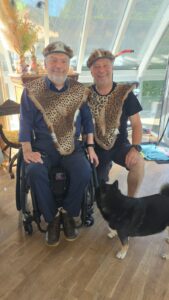
Tino’s twin brother was only 19 years old when, following a gymnastics session, he became quadriplegic. Suddenly, I saw much of Tino’s work differently.
I no longer looked in the same way at his studies involving people with paraplegia and quadriplegia. His commitment to making diving possible for people with severe disabilities no longer seemed like just another area of professional interest. Behind it, there was a life. There was a brother. There was the experience of a family that had to learn what it means when the life of a nineteen-year-old changes in a single moment.
I do not want to explain Tino’s motivations on his behalf, nor reduce his entire scientific career to one event. But at that moment, I began to understand differently how important his brother’s experience may have been for a large part of his work with people with disabilities.
Tino did not stop at saying that people with disabilities could dive. He helped make it possible.
And then, as a true scientist, he tried to explain how their physiology responds underwater, what is safe, what carries risk, and what we need to understand in order to make possible for them something that others often take for granted.
And it was precisely from that work that the book he gave us that day emerged.
As I listened to him, I thought of Miša Živojinović. And of our project Vertical Again.
I thought about the people for whom, more than twenty-five years ago, we tried to create an opportunity to experience freedom of movement again – only this time, underwater.
I thought how wonderful it would have been if Tino and we had known as much about one another then as we do today. If we had joined forces.
If what we were trying to achieve in practice had been linked with the knowledge he was creating through science. But life rarely arranges things so neatly. Sometimes it takes many years before we realise that people who seemed to be walking on a different path were, in fact, walking very close to us.
Perhaps that is why this is not really a portrait of a great physiologist, a researcher, or one of the people who has contributed so much to diving medicine. All of that can be found in his biography. I am more interested in something else.
I am interested in how a person can take an experience that deeply affected his own family and turn it into knowledge that later helps thousands of other people. How a personal story is not turned into sentimentality, but into research. How research is not left behind in the laboratory, but returned to the people who need it.
And how, after hundreds of scientific papers and decades of work, he still approaches new questions with the same curiosity. Perhaps that is why some professors never stop being professors. Not because they stand behind a lectern.
But because every time we meet them, they make us ask another question, look at something we thought we understood from a different angle, and realise how much there still is to learn.
We have professors while we are students. True professors, however, stay with us for life. It seems I am still learning from Tino Balestra.
♥
Profesora u životu imamo mnogo. Neke zaboravimo čim položimo ispit, nekih se sećamo po jednoj rečenici, a od nekih nastavimo da učimo i kada odavno više nismo studenti.
Za mene je jedan od takvih profesora Constantino Balestra. Tino, kako ga zovu ljudi koji ga poznaju.
Kada pogledate njegovu profesionalnu biografiju, lako je razumeti zašto ga ljudi u svetu ronilačke fiziologije i medicine dobro poznaju. Profesor je fiziologije i direktor Laboratorije za integrativnu fiziologiju na Haute École Bruxelles-Brabant u Briselu, a istovremeno je i potpredsednik DAN Europe zadužen za istraživanje i obrazovanje. Ali za mene je on pre svega – profesor.
I to profesor već veoma dugo.
Upoznao sam ga u Beogradu, kada je bio jedan od stranih profesora koji su dolazili da predaju prvoj generaciji polaznika subspecijalizacije iz hiperbaricne medicine. Sećam se tih predavanja, ali još više se sećam osećaja da slušamo nekoga ko ne prenosi samo ono što je pročitao, nego govori o nečemu što zaista istražuje, razume i živi.
Ja hiperbaricnu medicinu nisam učio zato što sam planirao da se njome svakodnevno bavim u ordinaciji. Mene je privlačilo ronjenje. A ronjenje me je tih godina vodilo na različite strane. Sa Mišom Živojinovićem radio sam projekat „Ponovo uspravni“, pokušavajući da pokažemo koliko ronjenje može da znači osobama sa invaliditetom. Učestvovao sam u osnivanju DAN-a za Balkan, bavili smo se posledicama osiromašenog uranijuma u zalivu Žanjice u kome smo i sami ronili, prevodili i pisali knjige o bezbednosti u ronjenju, prvoj pomoći i davanju kiseonika.
Tada nisam mogao da znam da će se, mnogo godina kasnije, jedna od tih priča na gotovo neverovatan način ponovo spojiti sa Tinom. U međuvremenu su prošle decenije. Ispostavilo se, međutim, da profesor Balestra nije ostao samo profesor iz jednog perioda mog školovanja.
Zahvaljujući AIDA-i, međunarodnoj organizaciji koja upravlja freedivingom, nastavili smo redovno da se srećemo. I svaki put kada razgovaram sa njim imam isti utisak kao nekada u učionici – da ima još nešto što nisam znao i što vredi čuti.
Tino je neobična kombinacija istraživača, naučnika i praktičara. Ljudi koji se bave naukom dobro znaju koliko je teško spojiti te tri stvari. Možete biti odličan istraživač, a da nemate mnogo dodira sa stvarnim problemima ljudi. Možete biti vrhunski praktičar, ali bez potrebe da ono što vidite sistematski proverite. Kod njega te granice gotovo da nema.
Nedavno smo ponovo imali malo vremena da sednemo i razgovaramo. Naravno, vrlo brzo smo stigli do novih istraživanja. Nekoliko radova u pripremi, nekoliko upravo objavljenih, neka nova pitanja koja tek treba rešiti.
Marija se našalila da Tinu, kada želi da proveri šta nauka kaže o određenom pitanju iz ronjenja, PubMed gotovo da i nije potreban.bDovoljno je da otvori folder sa sopstvenim radovima. U njemu su stotine naučnih članaka. bŠala, naravno, ali prilično bliska istini.
Toga dana Tino nam je poklonio i svoju poslednju knjigu, posvećenu patofiziološkim problemima ronjenja osoba sa invaliditetom, uz dozvolu da je slobodno delimo sa našom zajednicom.
Već bi i to bilo sasvim dovoljno za jedan portret. Ali onda sam saznao nešto što, verovatno, odavno trebalo da znam.
Tinov brat blizanac imao je samo 19 godina kada je, nakon jedne gimnastičke seanse, ostao kvadriplegičar. Odjednom mi je mnogo toga u Tinovom radu izgledalo drugačije.Nisam više na isti način gledao njegove radove o osobama sa paraplegijom i kvadriplegijom. Njegovo angažovanje da ljudima sa teškim invaliditetom omogući ronjenje više nije bilo samo još jedna oblast njegovog profesionalnog interesovanja. Iza toga je postojao život. Postojao je brat. Postojalo je iskustvo porodice koja je morala da nauči šta znači kada se život devetnaestogodišnjaka promeni u jednom trenutku.
Ne želim da umesto Tina objašnjavam šta ga je tokom života motivisalo niti da njegov čitav naučni rad svedem na jedan događaj. Ali tog trenutka počeo sam drugačije da razumem koliko je iskustvo njegovog brata moglo da bude važno za veliki deo njegovog rada sa osobama sa invaliditetom.Tino nije ostao samo na tome da kaže da i ljudi sa invaliditetom mogu da rone. Pomagao je da to zaista bude moguće.
A onda je, kao pravi naučnik, pokušavao da objasni kako njihova fiziologija reaguje pod vodom, šta je bezbedno, šta predstavlja rizik i šta moramo da znamo da bismo im omogućili ono što drugi uzimaju zdravo za gotovo.I upravo iz tog rada nastala je i knjiga koju nam je tog dana dao.
Dok sam ga slušao, mislio sam na Mišu Živojinovića. I na naš projekat Ponovo uspravni. Na ljude kojima smo pre više od dvadeset pet godina pokušavali da omogućimo da ponovo iskuse slobodu kretanja – samo ovog puta pod vodom. Pomislio sam koliko bi bilo lepo da smo Tino i mi tada znali jedni za druge onoliko koliko znamo danas. Da smo udružili snage. Da je ono što smo mi pokušavali praktično da uradimo bilo povezano sa znanjem koje je on stvarao. Ali život retko slaže stvari tako uredno.
Ponekad tek posle mnogo godina shvatimo da su ljudi koji su hodali nekim drugim putem zapravo išli veoma blizu nas. Možda zato ovaj tekst nije portret velikog fiziologa, istraživača ili jednog od ljudi koji su mnogo uradili za ronilačku medicinu. Sve to može da se pronađe u njegovoj biografiji. Mene više zanima nešto drugo.
Zanima me kako jedan čovek od iskustva koje je pogodilo njegovu porodicu napravi znanje koje kasnije pomaže hiljadama drugih ljudi. Kako ličnu priču ne pretvori u patetiku, nego u istraživanje. Kako istraživanje ne ostavi u laboratoriji, nego ga vrati ljudima kojima je potrebno. I kako, posle stotina naučnih radova i decenija rada, još uvek sa istom radoznalošću otvara nova pitanja. Možda upravo zato neki profesori nikada ne prestanu da budu profesori. Ne zato što stoje za katedrom.
Nego zato što nas, kad god ih sretnemo, nateraju da ponovo nešto pitamo, da nešto što smo mislili da znamo pogledamo iz drugog ugla i da shvatimo koliko još ima da se uči. Profesore imamo dok studiramo.Prave profesore, međutim, imamo celog života. Ja, izgleda, još uvek učim od Tina Balestre.