Ten Empty Tables in Toronto
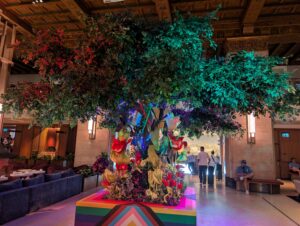 The REIGN restaurant at the Fairmont Royal York Hotel in Torontocould serve as a small metaphor for the modern city itself: everything is beautiful, everything is expensive, everything appears well organized — and yet, in the end, you still is not.The setting is undeniably beautiful. There is something old-fashioned, almost cinematic, about the place. It feels as if you have stepped into a hotel from another era, a time when breakfast was not simply eaten quickly, but performed as a small social ritual. Good jazz plays in the background, the ceilings are high, the details carefully designed, and there is a clear sense of tradition and luxury. Everything is ready for a perfect start to the day — until the organization gets involved.
And the organization is a story of its own.
In most European restaurants, things are much simpler. You sit down. A waiter comes to your table. You order from him. He brings the drinks, brings the food, clears the plates, brings the bill and takes the payment. The system is not always perfect, but it is understandable. There is one person who sees you, follows what is happening at your table, and understands the whole situation.
In North America, especially in large hotels, this simple act of having breakfast is often divided among a small army of employees. At the entrance, you are greeted by a host or hostess. Someone else clears the tables. A third person resets the cutlery. A fourth takes your order. A fifth brings the food. A sixth may bring the coffee. And when a problem arises, a supervisor appears — someone to whom you then have to explain once again what was already obvious.
This morning, around ten people were waiting in line outside the restaurant. The hostesses increased the tension by repeatedly explaining that there were no available tables. The line stood still, people waited, and then I was finally taken to my table. Around me, there were at least ten empty tables.
When I said that all of us could have been seated there immediately, they called the supervisor. I then had to briefly and calmly repeat to her what could be seen with the naked eye: guests were waiting, tables were empty, and the system was failing to connect the two. She apologized politely, which was professional. But the tables remained unset, and people continued to wait.
That may be the best image of the whole problem. There was no shortage of staff. On the contrary, I could see someone clearing tables, people setting them, others bringing food, and servers taking orders. What was missing was simplicity. What was missing was flow. What was missing was someone who could see the whole picture.
Breakfast itself is another story. At a time when most hotels offer a buffet, breakfast here is à la carte. When I asked why there was no buffet, the answer was that they cook eggs to order — as if hotels with buffets prepare their eggs the day before. There was something almost charming in that explanation, but also something deeply bureaucratic: the system has to justify itself, even when the justification is not very convincing.
The price is a separate matter altogether. It is difficult to have breakfast here for less than fifty Canadian dollars. For that amount, in many restaurants, you can have a proper meal. Here, you are paying for the atmosphere, the history of the hotel, the location, the jazz in the background, and the feeling of being somewhere important. That is not the problem. But if that is the price, then the service has to follow.
The coffee may be the best detail of the whole story. When breakfast costs that much, you expect at least a coffee with some character — something that feels like the work of a barista. Instead, the coffee seems to come from an ordinary machine. I gave up immediately. I have better Nespresso in my room.
And so, REIGN is not a bad place. On the contrary, it is a nice place. The food is not bad. The atmosphere is good. But the service is slow, the system is bulky, and the price is too high for what the guest ultimately receives.
A hotel with so many stars and such a history should do better. Not because the guest has the right to be spoiled, but because luxury is not only marble, jazz, and beautiful lighting. Luxury is when the system works so smoothly that you do not even notice it. When you sit down without drama. When the coffee justifies the price. When ten empty tables are not left standing as proof that procedure has defeated common sense.
♥
Restoran REIGN u hotelu Fairmont Royal York u Torontu mogao bi da posluži kao mala metafora savremenog grada: sve je lepo, sve je skupo, sve deluje organizovano, ali se na kraju ipak nije.
Ambijent je zaista lep. Ima nečeg starinskog, gotovo filmskog, u tom prostoru. Kao da ste ušli u hotel iz nekog drugog vremena, u kome se doručak ne jede na brzinu, već se obavlja kao mali društveni ritual. U pozadini dobar džez, oko vas visoki plafoni, pažljivo osmišljeni detalji, utisak tradicije i luksuza. Sve bi bilo spremno za savršen početak dana, kada se ne bi umešala organizacija.
A organizacija je posebna priča.
Kod nas, u većini evropskih restorana, stvari su jednostavnije. Sednete za sto. Priđe konobar. Kod njega naručite. On donese piće, donese hranu, skloni tanjire, donese račun i naplati. Sistem nije uvek savršen, ali je razumljiv. Postoji jedna osoba koja vas vidi, prati i zna šta se dešava za vašim stolom.
U Severnoj Americi, posebno u velikim hotelima, taj jednostavni čin doručka često je podeljen na čitavu malu armiju zaposlenih. Na ulazu vas dočekuje hostesa. Neko drugi čisti stolove. Treći namešta pribor. Četvrti prima porudžbinu. Peti donosi hranu. Šesti možda donosi kafu. A kada nastane problem, pojavljuje se supervisor, odnosno nadređeni u sali, kome onda morate još jednom da objasnite ono što je već bilo očigledno.
Jutros je ispred restorana čekalo desetak ljudi. Hostese su podizale nervozu objašnjavajući da nema mesta. Red je stajao, ljudi su čekali, a onda su me konačno odvele do stola. Oko mene je bilo najmanje deset praznih stolova.
Kada sam rekao da smo svi mogli odmah da sednemo, pozvale su nadređenu osobu. Morao sam i njoj ukratko da prepričam ono što se videlo golim okom: gosti čekaju, stolovi su prazni, a sistem ne uspeva da spoji jedno s drugim. Ona se ljubazno izvinila. I to je bilo profesionalno. Ali stolovi su i dalje ostali nenamesteni, a ljudi su i dalje čekali.
U tome je možda najbolja slika problema. Nije nedostajalo osoblja. Naprotiv, u sali sam video osobu koja čisti stolove, ljude koji serviraju, one koji donose hranu i konobare kod kojih se naručuje. Nedostajala je jednostavnost. Nedostajao je protok. Nedostajao je neko ko vidi celinu.
Doručak je, opet, posebna priča. U vreme kada većina hotela nudi bife, ovde je doručak à la carte. Kada sam pitao zašto nema bifea, odgovor je bio da oni peku jaja po porudžbini — kao da u hotelima sa bifeom jaja spremaju dan ranije. U tom objašnjenju ima nečeg simpatičnog, ali i nečeg duboko birokratskog: sistem mora da opravda sam sebe, čak i kada objašnjenje ne zvuči ubedljivo.
Cena je tek posebna tema. Teško je doručkovati bez pedeset kanadskih dolara. Za taj novac se u mnogim restoranima može pojesti ozbiljan obrok. Ovde plaćate ambijent, istoriju hotela, lokaciju, džez u pozadini i osećaj da ste na važnom mestu. To nije sporno. Ali onda usluga mora da prati cenu.
Kafa je možda najbolji detalj cele priče. Kada doručak već toliko košta, očekujete bar kafu koja ima neki karakter, nešto što je delo bariste. Umesto toga, kafa deluje kao da dolazi iz običnog aparata. Odustao sam odmah. U sobi imam bolji Nespresso.
I zato REIGN nije loše mesto. Naprotiv, lepo je mesto. Hrana nije loša. Ambijent je odličan. Ali usluga je spora, sistem glomazan, a cena previsoka za ono što gost na kraju dobije.
Hotel sa toliko zvezdica i takvom istorijom morao bi bolje. Ne zato što gost ima pravo da bude razmažen, već zato što luksuz nije samo mermer, džez i lepo osvetljenje. Luksuz je kada sistem funkcioniše tako da ga ne primećujete. Kada sednete za sto bez drame. Kada kafa opravda cenu. Kada deset praznih stolova ne stoji kao dokaz da je procedura pobedila zdrav razum.