Why Doesn’t Serbia Have Well-Developed Sports Science?
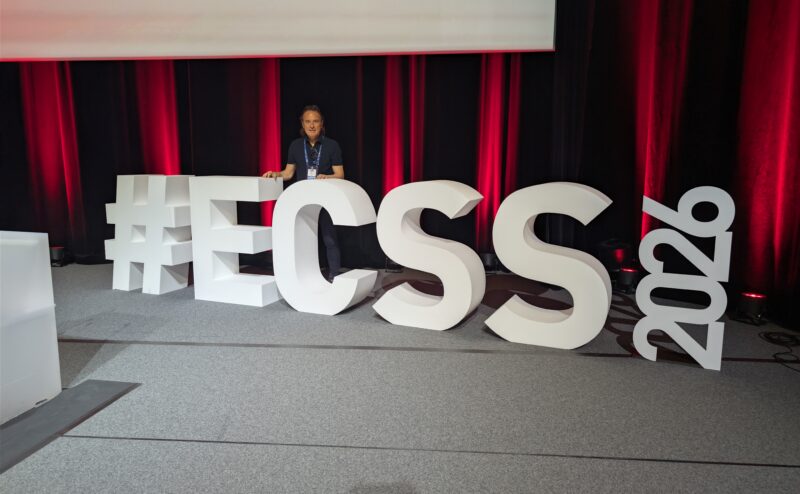
 The recent Congress of the European College of Sport Science highlighted, once again, a systemic problem in Serbia.
Although our country consistently produces outstanding athletic performances, these achievements are not accompanied by comparable progress in sports science. We have world-class athletes, successful coaches, and a rich sporting tradition, yet we lack a sufficiently strong scientific system capable of transforming practical experience into new knowledge.
The problem is not a shortage of talented individuals. Rather, it lies in the way we educate professionals, organize research, and finance science.
Following the congress, I wrote on Facebook:
“In 2005, we hosted the Congress of the European College of Sport Science in Belgrade. To ensure we were not merely organizers, Serbian researchers presented around 100 scientific papers. Twenty years later, Serbia has only three. I believe we can all agree that this is not representative of a country that proudly considers itself a sporting nation. Our sports scientists should enjoy a reputation comparable to that of our athletes—and that requires more research, more publications, and more scientific work.”
So, what happened?
We Still Educate Generalists Rather Than Specialists
The first problem lies within our educational system.
In Serbia, subjects such as exercise physiology, biomechanics, motor control, and sports nutrition are indeed taught. However, they are generally offered as individual courses within broad programmes of physical education and sport. Faculties continue to educate graduates primarily as teachers of physical education and sport rather than as specialists in specific fields of sports science.
The issue is therefore not that these disciplines are absent, but that they are insufficiently specialized. A student may acquire basic knowledge of physiology, biomechanics, or nutrition, yet there is no clearly defined educational pathway leading to a career as an exercise physiologist, sports nutrition scientist, biomechanist, or neurophysiologist specializing in sport.
In countries with advanced sports science systems, these disciplines are not simply supporting subjects for coaches and physical education teachers. They are independent scientific fields investigating exercise adaptation, metabolism, recovery, injury prevention, nutrition, motor control, psychology, and the many biological and social factors that determine athletic performance and health.
Scientific Progress Is Built by Teams, Not Individuals
The second problem is the absence of specialized departments, laboratories, and research institutes dedicated to specific areas of sports science.
How can an individual researcher from Serbia realistically compete with Professor Luc van Loon from Maastricht University when his research is supported by an entire scientific ecosystem?
Professor van Loon leads the Muscle Metabolism Research Group within the Department of Human Biology and the NUTRIM School of Nutrition and Translational Research in Metabolism. His team consists of professors, postdoctoral researchers, technicians, and more than a dozen PhD candidates working together on skeletal muscle metabolism, exercise, ageing, and nutrition.
When Professor van Loon presents his findings, he often speaks in the plural. These are not simply “his” results—they are the product of a multidisciplinary research team. One researcher designs the study, another performs muscle biopsies, another analyses stable isotopes, another processes the data, while PhD students and postdoctoral fellows spend years developing individual components of a common research programme.
In Serbia, by contrast, a university professor is often expected to teach multiple courses, complete administrative work, supervise students, recruit participants, conduct measurements, analyse data, and write manuscripts—all simultaneously.
Such individuals can certainly publish valuable scientific papers. What is far more difficult is building a sustainable research programme capable of influencing international science over decades.
Scientific breakthroughs are not produced solely by brilliant individuals. They require a critical mass of researchers working together on the same scientific questions for many years.
Without Stable Funding, There Is No Serious Research
The third—and perhaps most important—problem is funding.
Modern sports science requires sophisticated laboratories, advanced equipment, biochemical analyses, specialised software, technical staff, statisticians, and full-time researchers.
Metabolic chambers, stable isotope techniques, muscle biopsy analysis, molecular biology, three-dimensional motion analysis, and advanced neurophysiological measurements cannot be sustained through enthusiasm alone.
Serbia invested approximately 0.94% of its gross domestic product in research and development in 2024, whereas the average across the European Union was 2.24%. Although these figures refer to all scientific disciplines rather than sports science specifically, they clearly illustrate the financial environment in which Serbian researchers operate.
Publications from researchers in Western Europe or North America routinely disclose multiple funding sources and potential conflicts of interest, including government grants, university funding, European research programmes, charitable foundations, and industrial partnerships. Such declarations are essential for transparency, but they also reveal something else: behind those publications stand stable research infrastructures and long-term investment.
In Serbia, there is often very little to declare—not because our scientists are more independent, but because many simply lack research grants, dedicated teams, technical personnel, and funded doctoral students.
The Problem Is Not People—It Is the System
Serbia does not lack talented people.
We have excellent physicians, physiologists, coaches, nutritionists, psychologists, engineers, and young scientists capable of making important contributions to sports science.
The problem is that they usually work in isolation, across different universities and institutes, often without shared laboratories, common databases, or stable long-term funding.
We should not expect one enthusiastic professor or one talented PhD student to accomplish what entire research institutes achieve elsewhere.
Progress will not begin simply by changing the name of a faculty. It requires the creation of interdisciplinary research centres where physiologists, physicians, nutritionists, biomechanists, psychologists, biochemists, engineers, and data scientists work together.
Serbia needs specialised academic programmes, modern laboratories, funded doctoral researchers, and long-term research projects closely connected with athletes, sports clubs, and national federations.
As long as sports science continues to be viewed merely as a collection of courses within traditional physical education programmes, rather than as a strategically important scientific discipline in its own right, Serbia will continue to produce individual publications and isolated successes—but it will struggle to build sustained scientific excellence.
♥
Zašto Srbija nema razvijene sportske nauke?
Poslednji kongres Evrospkog koeldža sportskih nauka pokazao je još jednom da imamo sistemski problem. Srbija postiže značajne sportske rezultate, ali se taj uspeh ne prati odgovarajućim razvojem sportskih nauka. Imamo vrhunske sportiste, uspešne trenere i dugu sportsku tradiciju, ali nemamo dovoljno snažan sistem koji bi njihovo iskustvo pretvarao u nova naučna saznanja. Razlozi nisu u nedostatku talentovanih pojedinaca, već pre svega u načinu obrazovanja, organizaciji istraživanja i finansiranju nauke.
Na Facebook profilu sam napisao: “2005. godine Kongres Evropskog koledza sportskih nauka smo organizovali u Beogradu. Da ne bi bili samo organizatori spremili smo 100 radova. Dvadeset godina posle, Srbija ima tri rada. Verovatno delite nase misljenje da to nije reprezentativno za zemlju koja veruje da je zemlja sporta. Definitivno bi nasi sportski strucnjaci trebalo da imaju slicnu reputaciju kao i nasi sportisti, a to znaci vise pisanja, rada i publikovanja.”
Šta je razlog svemu tome?
Još uvek obrazujemo stručnjake širokog profila
Prvi problem nalazi se u obrazovnom sistemu. U Srbiji se fiziologija fizičke aktivnosti, biomehanika, motorna kontrola i pojedini aspekti ishrane zaista predaju. Međutim, oni su uglavnom pojedinačni predmeti unutar široko postavljenih programa fizičkog vaspitanja i sporta. Na fakultetima fizičkog vaspitanja osnovni akademski program i dalje nosi naziv „Fizičko vaspitanje …“, a akademsko zvanje je „diplomirani profesor fizičkog vaspitanja i sporta“. Sličan široki koncept postoji u celoj Srbiji, gde se fiziologija fizičke aktivnosti, biomehanika i ishrana izučavaju kao delovi opšteg programa. I nije problem odsustvo ovih predmeta, već odsustvo dovoljno duboke specijalizacije. Student može da upozna osnove fiziologije, biomehanike i sportske ishrane, ali nema jasno definisan obrazovni i profesionalni put kojim bi postao fiziolog vežbanja, sportski nutricionista-istraživač, biomehaničar ili neurofiziolog sporta.
U razvijenim sistemima sportske nauke nisu samo dodatak obrazovanju nastavnika fizičkog vaspitanja i trenera. One predstavljaju skup specijalizovanih biomedicinskih, prirodnih i društvenih disciplina koje istražuju adaptaciju na trening, metabolizam, oporavak, prevenciju povreda, ishranu, motoriku, psihologiju i druge faktore zdravlja i sportske sposobnosti.
Nauku ne stvaraju usamljeni profesori, već istraživački timovi
Drugi problem je nedostatak specijalizovanih katedri, laboratorija i instituta koji bi se kontinuirano bavili jednom jasno definisanom oblašću sportskih nauka.
Kako pojedinac iz Srbije može da bude ravnopravan sa profesorom Lukom van Lonom iz Mastrihta kada iza njegovih istraživanja ne stoji samo jedan profesor, već čitav sistem? Van Lon je rukovodilac istraživačke grupe za metabolizam mišića u okviru Departmana za humanu biologiju i instituta NUTRIM. Grupu čine profesori, postdoktorandi, tehničari i više od dvanaest doktoranada koji se zajednički bave metabolizmom skeletnih mišića, vežbanjem, starenjem i ishranom. kada predstavlja rezultate, često govori u množini. To nisu „njegovi“ rezultati u smislu rada jednog čoveka. To su rezultati istraživačke grupe u kojoj neko organizuje studiju, neko radi biopsije, neko analizira stabilne izotope, neko obrađuje podatke, a doktorandi i postdoktorandi godinama razvijaju pojedinačne segmente zajedničkog istraživačkog programa.
U Srbiji se, nasuprot tome, od jednog nastavnika često očekuje da istovremeno predaje više predmeta, obavlja administrativne poslove, radi sa studentima, prikuplja ispitanike, sprovodi merenja, analizira podatke i piše radove. Takav pojedinac može da objavi kvalitetan naučni rad, ali teško može da razvije dugoročan istraživački pravac koji će menjati međunarodnu nauku.
Naučni napredak ne nastaje samo zahvaljujući pametnim ljudima. Potrebna je kritična masa istraživača koji godinama rade na istom problemu.
Bez stabilnog finansiranja nema ozbiljnih istraživanja
Treći, a verovatno i najvažniji problem, jeste finansiranje.
Istraživanja u savremenim sportskim naukama zahtevaju sofisticiranu opremu, laboratorijske analize, potrošni materijal, softver, statističku podršku i zaposlene istraživače. Metaboličke komore, stabilni izotopi, analiza mišićnih biopsija, molekularne metode, trodimenzionalna analiza kretanja i napredna neurofiziološka merenja ne mogu se zasnivati na entuzijazmu pojedinca.
Srbija je tokom 2024. godine za istraživanje i razvoj izdvojila približno 0,94% bruto domaćeg proizvoda. Prosek Evropske unije iste godine iznosio je 2,24% BDP-a. To nisu podaci specifični samo za sportske nauke, ali veoma jasno pokazuju širi finansijski okvir u kojem rade naši istraživači. traživača iz razvijenih zemalja često se navode brojni izvori finansiranja i mogući sukobi interesa: državni fondovi, univerzitetski grantovi, evropski projekti, industrijski partneri i fondacije. Naravno, industrijsko finansiranje zahteva strogu transparentnost i ne garantuje nezavisnost rezultata. Međutim, sama činjenica da postoji obaveza prijavljivanja više izvora finansiranja govori da iza istraživanja postoji razvijena infrastruktura.
Kod nas često nema šta da se prijavi. Ne zato što su naši istraživači nezavisniji, već zato što neretko nemaju ni stabilan projekat, ni istraživački tim, ni tehničare, ni doktorande zaposlene da se bave samo istraživanjem.
Problem nije u ljudima, već u sistemu
Srbija nema manjak pametnih i sposobnih ljudi. Imamo lekare, fiziologe, trenere, nutricioniste, psihologe, inženjere i mlade istraživače koji bi mogli da doprinesu razvoju sportskih nauka. Međutim, oni rade odvojeno, na različitim fakultetima i institutima, često bez zajedničke opreme, baze podataka i dugoročnog finansiranja.
Zato ne treba očekivati da će jedan entuzijasta, jedan profesor ili jedan doktorand nadoknaditi ono što u razvijenim sredinama rade čitavi instituti.
Napredak neće početi promenom naziva fakulteta, već stvaranjem interdisciplinarnih centara u kojima će zajedno raditi fiziolozi, lekari, nutricionisti, biomehaničari, psiholozi, biohemičari i stručnjaci za podatke. Potrebni su nam zasebni obrazovni programi, funkcionalne laboratorije, stabilno finansirani doktorandi i višegodišnji istraživački projekti povezani sa sportistima, klubovima i savezima.
Dok sportske nauke budemo posmatrali kao nekoliko predmeta unutar tradicionalnog sistema fizičke kulture, a ne kao kompleksnu i strateški važnu naučnu oblast, imaćemo pojedinačne radove i pojedinačne uspehe — ali nećemo imati kontinuirani naučni napredak.