Lapo-Hans Schleifer Ciancio (2005 – ) Lapo is not going to university. But does that mean he is not learning?
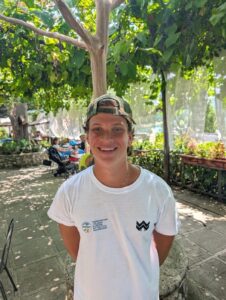 At the Wakeboarding World Championships in Rieti, I met a very interesting young man.
His name is Lapo-Hans Schleifer Ciancio. He is 21 years old. He simply describes himself as “half German, half Italian.” He speaks English fluently, has some knowledge of French and Spanish, and is currently preparing for his next adventure — a work-and-travel experience in Australia.
When I asked him what he was studying, I expected one of the usual answers.
Economics. Computer science. Sports. Something else.
“Nothing,” he replied.
Then he added something that interested me far more: he does not believe that traditional education is the only, or necessarily the best, way to learn what he needs today. He believes that much can be learned through work, travel, the people we meet, the events we take part in, and the enormous amount of knowledge that is now available outside formal educational institutions.
As a university professor, statements like this stopped bothering me a long time ago.
They always make me think.
A DEGREE AND COMPETENCE ARE NOT THE SAME THING
Lapo came to the World Championships in Rieti thanks to contacts, previous experience, and the impression he had made on people he had worked with before.
Among his many tasks, he was also assigned to work as a chaperone during doping control.
At first glance, that may not sound particularly complicated. But a chaperone needs to understand much more than simply escorting an athlete from the field of play to the doping control station.
He needs to know what he is allowed to do and what he is not. He must clearly explain the athlete’s obligations, accompany the athlete, respect their privacy and dignity, while at the same time remaining sufficiently firm to ensure that the procedure is carried out properly.
There is not much room for improvisation in anti-doping.
Almost nothing had to be explained to Lapo twice.
He understood his role very quickly. More importantly, he understood the people he was working with.
He communicated with athletes in a relaxed and natural way, but without crossing boundaries. He respected their feelings and integrity, yet remained clear and determined when it was time to escort them to the doping control station.
Watching him work made me think about something that has troubled me for a long time.
As a university professor, I increasingly meet students who have chosen a profession but somehow seem to lack the desire to become truly good at it. Passing an exam becomes more important than understanding. Getting a grade becomes more important than learning. A diploma becomes the goal rather than confirmation of a much longer process.
And then, through my work in sport, I meet people who have no formal education specifically related to the job they are doing — yet they perform it flawlessly.
And I inevitably find myself asking:
What does it actually mean to be educated today?
“MY GRANDPARENTS DIDN’T AGREE”
Later, we continued talking.
I asked Lapo how his family felt about his decision not to go to university.
His mother supports him. His grandparents did not agree with his decision.
That is, in fact, completely understandable.
Our parents’ generation — and our own — grew up with an almost mathematical formula for success:
school – university – job – security.
If you study hard, graduate from a good university, and work diligently, life is supposed to fall into place.
The problem is that this equation is no longer quite so simple.
Lapo told me about friends who never finished university but are now doing very well professionally. But he also spoke about friends who enrolled, graduated and now, with their degrees in hand, have no idea what they want to do next.
Of course, neither example proves anything.
There are people without university degrees who never find their way. And there are people for whom an excellent formal education has opened up the world.
There are also professions — medicine is an obvious example — in which I certainly would not want someone to decide that anatomy, pharmacology or surgery can be learned entirely from YouTube.
So the real dilemma is not:
school or the internet?
Nor is it:
university or life?
The real question is much more difficult:
What does a young person need to know and be able to do in order to find their place in a world that is changing faster than our educational systems?
KNOWING WHAT YOU WANT
We talked for a long time — about education, work, travel, Australia, people and the future.
And somehow, we kept returning to the same idea.
It is important to know what you want.
You may not need to know exactly where you will be in ten years. At 21, that is probably not even possible.
But you need curiosity.
You need to want to learn.
You need to be willing to work.
You need to know how to listen to others.
And you need enough courage to change direction when you realise that something is not working.
Formal education can be an enormous advantage.
But only if it is genuinely education — rather than simply collecting exams, ECTS credits and diplomas.
AND THEN ARTIFICIAL INTELLIGENCE ARRIVED
The internet had already broken the monopoly that schools and universities once held over knowledge.
Today, you can listen to lectures by professors from the world’s best universities, learn a foreign language by speaking with people on the other side of the planet, complete specialised courses, learn programming, analyse data or learn how to run a business without ever setting foot in a traditional classroom.
And now artificial intelligence has arrived.
The change will be even greater.
That is why I believe educational institutions can no longer be satisfied simply with passing information on to students.
Information is everywhere.
What is becoming far more important is teaching a young person how to distinguish knowledge from nonsense, evidence from opinion, fact from manipulation; how to ask the right question, how to solve a problem, how to communicate with people, and how to continue learning once they leave the classroom.
In other words, perhaps the most important thing is no longer how much information you can remember.
What matters more is what you can do with it.
THE SPARK IN HIS EYES
I do not know where Lapo will be in ten years.
Perhaps one day he will decide to go to university after all.
Perhaps he will not.
Perhaps he will build a career in sport, or perhaps in an entirely different field. Maybe Australia will change all of his current plans.
But when you watch him talk about what he wants to do, you see something that is much harder to teach at university.
A spark in his eyes.
Curiosity.
Determination.
Self-confidence without arrogance.
And an obvious desire to understand the world around him.
I watched him again as he worked with the athletes. Nobody had given him a diploma in communication. He had not passed an exam in dealing with people. He had never been graded on his ability to cope with an unfamiliar situation.
He simply showed that he could do it.
Perhaps that is why it is no longer enough to keep telling children:
“You have to finish school.”
Perhaps we should tell them something far more demanding:
“You have to learn.”
At school.
At university.
On the internet.
From professors.
From colleagues.
From people you happen to meet on the other side of the world.
From good decisions — but even more from the wrong ones.
And perhaps, in the future, we will have to stop dividing education into formal and informal, as if one were genuine and the other somehow secondary.
What will matter is something much simpler:
what you know, what you can do, what kind of person you are, and what you are prepared to do with what you have learned.
Lapo is only at the beginning of that journey.
But watching him in Rieti, I found it difficult to imagine that he will not find his place.
Perhaps precisely because he is still searching for it with his eyes wide open.
♥
LAPO NE IDE NA FAKULTET. ALI DA LI TO ZNAČI DA SE NE OBRAZUJE?
Na Svetskom prvenstvu u wakeboardu u Rietiju upoznao sam jednog zanimljivog mladića.
Zove se Lapo-Hans Schleifer Ciancio. Ima 21 godinu. Za sebe jednostavno kaže da je „half German, half Italian“. Engleski govori tečno, snalazi se na francuskom i španskom, a trenutno se priprema za sledeću avanturu – work and travel u Australiji.
Kada sam ga pitao šta studira, očekivao sam jedan od uobičajenih odgovora.
Ekonomiju. Informatiku. Sport. Nešto treće.
„Ništa“, odgovorio je.
A onda je dodao nešto što me je mnogo više zainteresovalo: ne smatra da je klasično školovanje jedini, niti nužno najbolji način da danas nauči ono što mu je potrebno. Veruje da mnogo toga može da stekne kroz rad, putovanja, ljude koje upoznaje, događaje na kojima učestvuje i ogromnu količinu znanja koja nam je danas dostupna van formalnih obrazovnih institucija.
Kao univerzitetskom profesoru, takva rečenica odavno mi en smeta. Uvek me natera da razmišljam.
DIPLOMA I SPOSOBNOST NISU ISTO
Lapo je na Svetsko prvenstvo u Rietiju stigao zahvaljujući poznanstvima, prethodnim iskustvima i utisku koji je ostavljao na ljudima sa kojima je radio.
Između mnogih zadataka, dobio je zadatak da bude i chaperone u doping kontroli.
To na prvi pogled ne izgleda posebno komplikovano. Međutim, chaperone mora da razume mnogo više od toga da sportistu odvede od terena do doping stanice. Mora da zna šta sme, a šta ne sme. Mora jasno da objasni sportisti njegove obaveze, da ga prati, poštuje njegovu privatnost i dostojanstvo, a istovremeno ostane dovoljno odlučan da procedura bude sprovedena kako treba.
U antidopingu nema mnogo prostora za improvizaciju.
Lapu gotovo ništa nije trebalo ponavljati dva puta.
Vrlo brzo je razumeo svoju ulogu. Još važnije, razumeo je ljude sa kojima radi.
Komunicirao je sa sportistima opušteno i prirodno, ali bez prelaska granice. Poštovao je njihova osećanja i integritet, ali je ostajao jasan i odlučan kada je trebalo da ih sprovede do doping stanice.
Gledao sam ga kako radi i pomislio na nešto što me već dugo muči.
Kao univerzitetski profesor sve češće srećem studente koji su izabrali neku profesiju, ali kao da nemaju želju da u njoj postanu zaista dobri. Položiti ispit postaje važnije od razumeti. Dobiti ocenu važnije od naučiti. Diploma postaje cilj umesto potvrde jednog mnogo dužeg procesa.
A onda, radeći u sportu, sretnem ljude koji formalno nisu obrazovani baš za posao koji obavljaju, ali ga obavljaju besprekorno.
I tada se neizbežno zapitam: šta danas uopšte znači biti obrazovan?
„MOJA BAKA I DEDA SE NISU SLAGALI“
Kasnije smo nastavili razgovor.
Pitao sam Lapa kako njegova porodica gleda na odluku da ne studira.
Majka ga podržava. Ali ga nisu podržale ni bake i deke, ni sa jedne ni sa druge strane porodice.
To je zapravo sasvim razumljivo.
Generacije naših roditelja i nas samih odrastale su sa gotovo matematičkom formulom uspeha:
škola – fakultet – posao – sigurnost.
Ako dobro učiš, završiš dobar fakultet i budeš vredan, život bi trebalo da pronađe svoje mesto.
Problem je što ta jednačina više nije tako jednostavna.
Lapo mi je naveo prijatelje koji nisu završili fakultet, a danas uspešno rade. Ali i one koji su studirali, diplomirali i sada, sa diplomom u rukama, zapravo ne znaju šta bi dalje.
Naravno, nijedan od ta dva primera ništa ne dokazuje.
Postoje ljudi bez fakulteta koji nikada ne pronađu svoj put. Postoje i ljudi kojima je upravo vrhunsko formalno obrazovanje otvorilo svet.
I postoje profesije – medicina je očigledan primer – u kojima ne bih želeo da neko odluči da anatomiju, farmakologiju ili hirurgiju nauči samo preko YouTubea.
Zato prava dilema nije:
škola ili internet?
Niti:
fakultet ili život?
Pravo pitanje je mnogo teže:
šta mladi čovek mora da zna i ume da bi pronašao svoje mesto u svetu koji se menja brže nego obrazovni sistemi?
ZNATI ŠTA ŽELIŠ
Pričali smo dugo – o školovanju, radu, putovanjima, Australiji, ljudima i budućnosti.
I nekako smo se stalno vraćali istoj stvari.
Važno je znati šta želiš.
Možda ne moraš tačno da znaš gde ćeš biti za deset godina. Sa dvadeset jednom to verovatno nije ni moguće.
Ali moraš imati radoznalost.
Moraš želeti da nešto naučiš.
Moraš biti spreman da radiš.
Moraš znati da slušaš druge.
I moraš imati dovoljno hrabrosti da promeniš pravac kada vidiš da nešto ne funkcioniše.
Formalno obrazovanje tu može biti ogromna prednost.
Ali samo ako je zaista obrazovanje, a ne sakupljanje ispita, ESPB bodova i diploma.
A ONDA JE STIGLA VEŠTAČKA INTELIGENCIJA
Internet je već promenio monopol koji su škole i univerziteti nekada imali nad znanjem.
Danas možete slušati predavanja profesora sa najboljih svetskih univerziteta, učiti strani jezik razgovarajući sa ljudima sa drugog kraja planete, završavati specijalizovane kurseve, naučiti da programirate, analizirate podatke ili vodite posao a da nikada niste zakoračili u tradicionalnu učionicu.
A sada je stigla i veštačka inteligencija.
Promena će biti još veća.
Zato mislim da obrazovne institucije više ne mogu da se zadovolje time da studentima prenose informacije.
Informacije su svuda.
Mnogo važnije postaje naučiti mladog čoveka kako da razlikuje znanje od gluposti, dokaz od mišljenja, činjenicu od manipulacije; kako da postavi dobro pitanje, kako da reši problem, kako da komunicira sa ljudima i kako da nastavi da uči kada izađe iz učionice.
Drugim rečima, možda više nije najvažnije koliko znanja možete da zapamtite.
Važnije je šta sa njim možete da uradite.
SJAJ U OČIMA
Ne znam gde će Lapo biti za deset godina.
Možda će se jednog dana ipak upisati na fakultet.
Možda neće.
Možda će napraviti karijeru u sportu, možda u potpuno drugoj oblasti. Možda će Australija promeniti sve njegove sadašnje planove.
Ali kada ga pogledate dok govori o tome šta želi da uradi, vidite nešto što se mnogo teže predaje na fakultetu.
Sjaj u očima.
Radoznalost.
Odlučnost.
Samopouzdanje bez arogancije.
I očiglednu želju da razume svet oko sebe.
Posmatrao sam ga zatim ponovo kako radi sa sportistima. Niko mu nije dao diplomu za komunikaciju. Nije položio ispit iz odnosa prema ljudima. Nije imao ocenu iz snalaženja u nepoznatoj situaciji.
Jednostavno je pokazao da ume.
Možda je zato pogrešno da deci ponavljamo samo:
„Moraš da završiš školu.“
Možda bi trebalo da im kažemo nešto mnogo zahtevnije:
„Moraš da naučiš.“
U školi.
Na fakultetu.
Na internetu.
Od profesora.
Od kolega.
Od ljudi koje slučajno sretneš na drugom kraju sveta.
Iz dobrih odluka, ali još više iz pogrešnih.
I verovatno ćemo u budućnosti morati da prestanemo da delimo obrazovanje na formalno i neformalno, kao da je jedno pravo, a drugo sporedno.
Biće važno samo jedno:
šta znaš, šta umeš, kakav si čovek i šta si spreman da uradiš sa onim što si naučio.
Lapo je tek na početku tog puta.
Ali gledajući ga u Rietiju, teško mi je bilo da pomislim da neće pronaći svoje mesto.
Možda upravo zato što ga još uvek traži otvorenih očiju.